Oranges for Babies - Starting Age, Choking Safety & Serving Guide (6–24 Months)
Citrus sinensis
Oranges are juicy and sweet citrus fruits, rich in vitamin C and dietary fiber, making them a favorite for boosting immunity and aiding digestion. Learn Benefits, Safety & How to Serve Orange to Babies
When Can Babies Eat Orange? - Introducing Orange to Your Baby
Oranges are not safe for babies under 9 months due to potential health risks. After this age, they can be introduced carefully in small amounts starting at 9 months. This guide explains when it is safe and how to introduce Orange properly. It can also be served as soft, graspable pieces, making it suitable for baby-led weaning (BLW) when prepared safely.
When to Serve Orange to Babies
Most pediatricians recommend starting solids around 6 months of age. Orange is a fantastic choice to start at 9-months because of its immunity-boost.
Introduce one new food at a time and wait 3-5 days between each new food to easily spot potential allergies.
Safety & Allergy Information
Orange may pose a choking risk depending on texture and size. Ensure it is prepared safely according to your child's age. It is typically recommended to start from 9-months.
Food Characteristics
Safety & Allergy Information
Essential guidelines for safely introducing Orange to your baby.
Ensure to remove seeds before serving.
Avoid offering whole segments to prevent choking.
Citrus membranes, seeds, and whole intact segments are a moderate-to-high choking hazard due to their fibrous casing and slippery texture.
Always monitor your baby while feeding new foods for any signs of discomfort.
Evolution of Serving Orange
Safe preparation methods based on your baby's developmental stage.
smooth Texture
Serving Ideas
- avoid serving oranges
Preparation Tips
- avoid serving oranges
- introduce citrus after 8 months
How to Serve Orange for Baby-Led Weaning (BLW)
Segments can be offered as finger-food once peeled and pith removed.. It can be introduced as BLW food starting 9-months.
Benefits of Orange for Babies
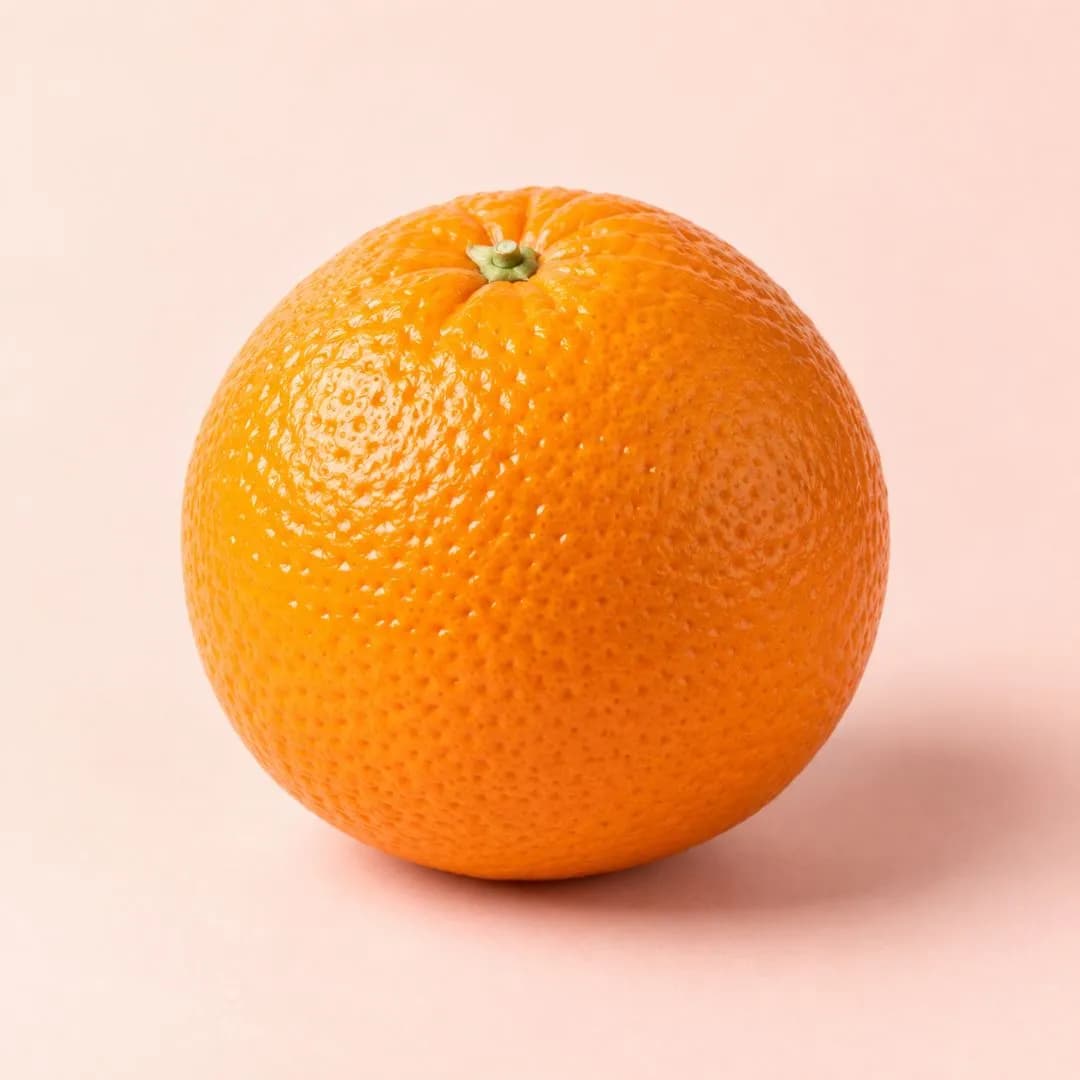
Introducing Orange into your baby's diet provides a natural source of essential nutrients. Orange are an excellent nutritional source of vitamin-c, fiber, potassium.
Orange Nutrition for Babies
Key vitamins and minerals in Orange for your baby's development stage.
enhances iron absorption and immunity
supports healthy digestion and bowel movement
Daily Value (%) for Infants
* Percentage of Recommended Daily Intake (RDI) for infants 7-12 months.
Full Nutrition Breakdown
The following nutrition information is for 100g of an Orange.Values may vary slightly depending on variety and ripeness.
Nutrition Facts
Serving Size: 100g (Orange)
Vitamins
Minerals
* Values are approximate per 100g and may vary based on ripeness and preparation.
Feeding Tips for Orange
Start with small, manageable segments.
Combine with iron-rich foods for improved absorption.
How to Store Orange
Food Tracker
Log your trials and track baby's reactions for this food.
Common Questions About Orange for Babies
When can I introduce oranges to my baby?
How do I prepare oranges for my baby?
Can oranges cause allergies in babies?
What should I do if my baby doesn't like oranges?
Can babies have orange juice instead of whole oranges?
Why does my baby get a red rash around their mouth after eating oranges?
Can I pair oranges with iron-rich foods?
Complete Guide to Orange for Babies
Oranges can be introduced to your baby from around 9 months of age, ideally in the morning when they can enjoy its refreshing and tangy taste. Including oranges in their diet a few times a week can be beneficial. Start with small amounts mixed with cereals or other fruits. Gradually increase the portion as they get used to the flavor.
Oranges are generally easy to digest, but in some cases, may cause gas. Watch out for any signs of digestive discomfort. Since they are high in vitamin C, they help enhance iron absorption, which is essential for your baby's growth.
Always remove the seeds and pith to avoid choking hazards. Offer oranges peeled and in small segments to promote safe eating habits.Initially, offer oranges as a smooth puree. As your baby grows, you can introduce lumpy textures, and by 18 months, they can handle soft solids. By 24 months, they can enjoy firm slices, promoting self-feeding under supervision. Always ensure the oranges are fresh and properly prepared to maintain their nutritional benefits.
Detailed Serving Breakdown by Developmental Stage
6 to 9 Months: Palmar Grasp & Oral Mapping
At this stage, babies cannot pick up small items using individual fingers; they use their whole palm.
Option 1 (Resistive Chewing): Wash an orange thoroughly. Cut a thick round slice, then cut it in half to make a large half-moon wedge with the peel on. Remove all exposed seeds. Baby will suck on the pulp and gnaw on the rind, which builds jaw strength and maps the back of the mouth without breaking off large slippery chunks.
Option 2 (Pulp Only): Supreme the orange by cutting off the peel and carefully slicing the raw pulp out from between the fibrous membranes. Mash the soft pulp into oatmeal, yogurt, or feed directly with a preloaded spoon.
9 to 12 Months: Developing the Pincer Grasp
Babies begin picking up smaller morsels with their index finger and thumb.
Discontinue large wedges with the rind.
Cut membraneless segments into small, bite-sized nibbles (roughly the size of a fingernail).
Never hand a baby a whole, unpeeled segment with its tough outer casing intact.
12 to 24 Months: Mastering Biting and Chewing
Toddlers have more molars and improved lateral tongue movement.
Offer segments with the clear inner membrane cut crosswise or gently scored to break the stringy fibers.
Teach the child to take controlled bites rather than shoving the entire slippery segment into their mouth.
Choking Hazard & Allergy Protocols
Choking Prevention
Whole orange segments, unchewed membranes, and citrus seeds present genuine airway obstruction risks.
Always inspect every segment for small, hidden seeds.
Remove the tough white membrane until the baby displays competent chewing and molars are emerging.
Never leave a baby unattended during feeding; ensure they are sitting upright at a 90-degree angle in a supportive highchair.
Allergies vs. Acid Sensitivity
Systemic Allergy: Citrus allergies are rare. True reactions trigger symptoms across multiple body systems (urticaria/hives, lip or facial swelling, vomiting, difficulty breathing). Contact emergency services immediately if breathing issues occur.
Acidic Skin Contact: The citric acid in oranges commonly irritates sensitive infant skin. You may notice temporary red patches around the mouth or a mild diaper rash shortly after ingestion. Applying a thin barrier ointment (like petroleum jelly) around the baby’s lips prior to feeding minimizes acid-induced skin irritation.
Foods Similar to Orange for Babies
Baby Recipes with Orange
Nutritious and easy-to-digest recipes using orange as a base.

Banana Orange Puree
A smooth blend of ripe banana and fresh orange, perfect for introducing citrus.
Orange Yogurt Parfait
Layers of creamy yogurt and juicy orange segments make a delightful snack.
Fruit Salad with Oranges
A colorful mix of seasonal fruits with sweet orange chunks.
Expert Guides for Your Journey
Step-by-step preparation guides to help you serve food safely at every stage.
The 100 First Foods Challenge
Introducing a wide variety of 100 foods before baby peaks at age one can significantly reduce picky eating. Track your progress with us!