Child Cough After Diwali: Smoke Irritation or Infection?
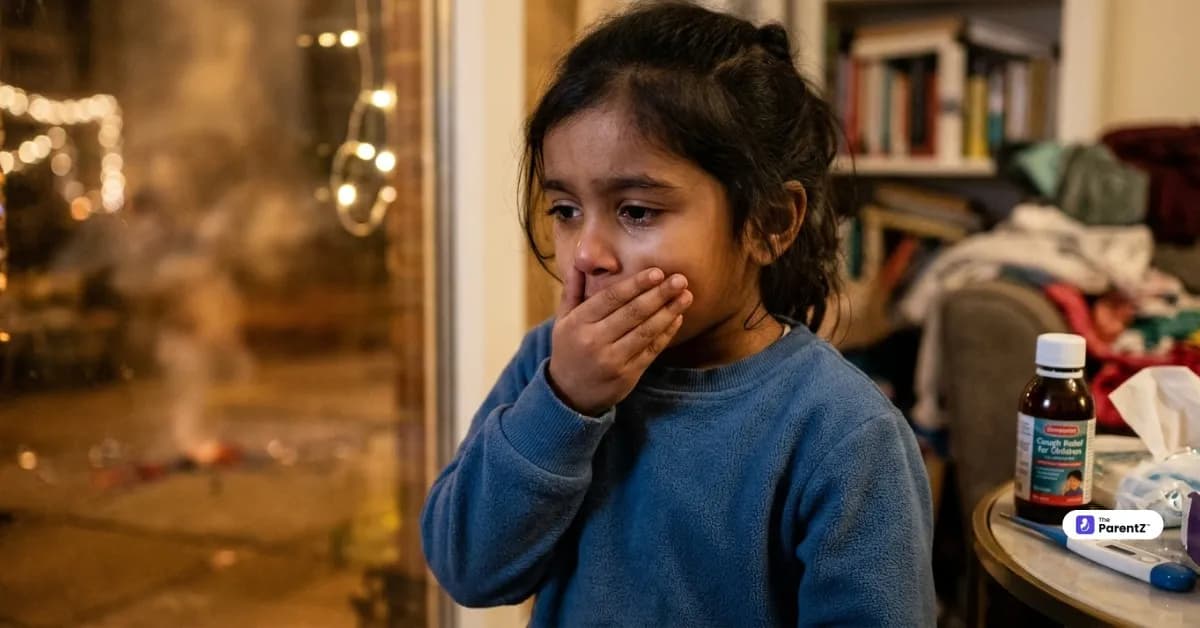
It’s close to midnight in Noida, two nights after Diwali. A six-year-old is still coughing. Not a wet, rattling cough. A dry, scratchy one that gets louder once the lights go off. His mother sits on the edge of the bed, phone in hand, typing “child cough after Diwali” for the third time.
Sound familiar? Lots of parents are in that exact spot this week.
Most post-Diwali coughs come from smoke-irritated airways or an ordinary viral cold, and they ease within one to three weeks. Fever, fast breathing, wheezing, or a cough that worsens every day means a doctor’s visit. The rest of this guide helps sort out which side your child is on.
Why So Many Children Are Coughing This Week
The air is bad.
Delhi’s AQI on Diwali day (8 November 2026) settled at 376, the highest festival-day reading since 2021, according to CPCB data reported by PTI. GRAP Stage III has been in force across Delhi-NCR since 6 November, and the IMD has forecast no significant rain in the capital until at least 15 November. Nothing is clearing the smoke.
Stubble adds to it. Punjab alone recorded 1,152 crop-residue fires on Diwali (8 November), the sharpest single-day spike of the season. Haryana recorded 80 fires on the same day. Punjab’s Diwali-day count alone was more than 25 times its figure on Diwali day last year, which was 45. Official data showed gaps at 43 of Delhi’s 59 monitoring stations during peak hours, so the 24-hour average may understate what children actually breathed overnight.
Kids suffer more. Their airways are small, they take in more air for their body size, and they’re usually the ones running around outside at 6 pm. If you live in another northern city, check your local reading on the CPCB website.
Smoke Irritation or Infection? A Quick Comparison
Sign | Smoke irritation | Infection | Asthma flare |
Fever | Usually none | Often present | Usually none |
Cough | Dry, tickly | Wet, chesty | Dry, with a wheeze |
Worst time | Mornings, nights, after outdoor play | All day, getting worse | Nights, early mornings, after running |
Other signs | Itchy, watery eyes | Runny nose, body ache | Tight chest, breathless during play |
Energy | Normal | Tired, fussy, eats less | Fine between attacks |
A child can have smoke trouble and a cold on the same day. When the signs look mixed, a doctor’s opinion is worth more than guessing.
Three Children, Three Different Nights
Child one has had a dry cough since Diwali night. No fever. Still asks for dinner and the tablet. Worse in the morning, better after an hour indoors. That pattern fits smoke irritation, and clean indoor air plus a few days usually settles it.
Child two started dry, but the cough turned wet and chesty. Fever arrived on day two. She’s cranky and barely touched lunch. Infection is the likelier story, so a check-up makes sense.
Child three has no fever at all, yet there’s a whistle when he breathes out, and the cough wakes him at 3 am. His mother says he sneezes through every winter. That points toward asthma or allergy, so a pediatrician should see him soon.
How Long Is a Normal Cough?
Most viral coughs improve within one to three weeks. Pediatric guidance treats a daily cough lasting more than four weeks as chronic and worth evaluation. In Indian practice, many clinicians and the Indian Academy of Pediatrics advise a check once the cough crosses three weeks without steady improvement.
In India, WHO guidance and national pediatric practice both recommend evaluating a cough that continues beyond two weeks to rule out asthma and tuberculosis.
Red Flags: Do Not Wait Till Morning
Get same-day medical help if the cough comes with any of these:
Fast breathing. WHO’s cut-off is 50 breaths a minute or more for babies aged 2 to 12 months, and 40 or more for ages 1 to 5. Count for a full minute while the child is calm or asleep.
Lower chest pulling inward with each breath
Blue or grey lips
A child too breathless to feed, talk or cry
New wheezing or noisy breathing
Fever for more than three days, or one that returns after going away
Chest pain, even without coughing
Unusual sleepiness or trouble waking
What Helps at Home
Keep windows closed on very poor air days and move play indoors. If fireworks were burned near your building, air the rooms briefly when outdoor AQI is lowest (usually afternoon) rather than keeping windows sealed all day, since indoor pollutants can also build up. Mop with a damp cloth, since dry sweeping throws settled dust back up. Push fluids. Warm water soothes a scratchy throat. A little honey at bedtime can calm a night cough in children older than one year.
Skip cough syrups for small kids unless a doctor prescribed them. That half-empty bottle from the last illness? Leave it. Antibiotics don’t help viral coughs or smoke irritation either, so there’s no point pushing for them.
A snug mask may help older kids outdoors. Thin cloth masks do little against fine smoke, though, so fewer outdoor hours on bad days work better.
The Mistakes That Land Families in Hospital
The big one is waiting “one more night” while breathing is clearly fast. Next comes the belief that no fever means no problem, which isn’t true for asthma. Sending a child to school with a temperature is the third.
Questions Parents Keep Asking
Can Diwali smoke cause a cough that lasts weeks?
It can start one and keep it going for days. If it lingers past two or three weeks, doctors look at asthma, allergies, post-nasal drip and reflux, along with infection.
My child has no fever. Can the cough wait?
Sometimes. A dry night cough with a wheeze, though, can be asthma even without fever, so mention it to the pediatrician.
Which doctor should we see?
Start with your regular pediatrician. The Indian Academy of Pediatrics is a good place to find one.
This guide is general information and cannot diagnose a child. When in doubt, get the child examined.
Key Takeaways
Smoke irritation usually means a dry cough, no fever and normal energy.
Infection leans toward fever, a wet cough, tiredness and daily worsening.
Wheeze or night coughing can signal asthma, even with a normal temperature.
Fast breathing, chest indrawing or blue lips need a doctor right away.
A cough beyond three weeks needs a check-up. In India a cough lasting beyond two weeks also warrants screening for asthma and tuberculosis.
More Help for Worried Parents
Want simple, practical answers for everyday parenting worries? Visit TheParentz.ai and keep your family’s questions covered all season.
More in this Category
What to Do When Your Baby Is Refusing Food - A Complete Guide

10 Things You’ll Wish You Had Written Down Before Your Baby’s Next Doctor Visit
Preparing for your baby's doctor visit? Discover 10 important things to write down beforehand, including health changes, feeding habits, sleep patterns, diaper changes, medications, developmental milestones, and questions to ask the pediatrician.

11 Baby Details Parents Should Record Before They Forget Them
Babies grow and change quickly, and many precious moments can easily be forgotten. Discover 11 important baby details parents should record, including birth information, first smiles, first words, feeding habits, sleep patterns, growth measurements, and developmental milestones.

Children’s Day 2026: 10 Meaningful Ways to Make Every Child Feel Seen Beyond Fancy Dress
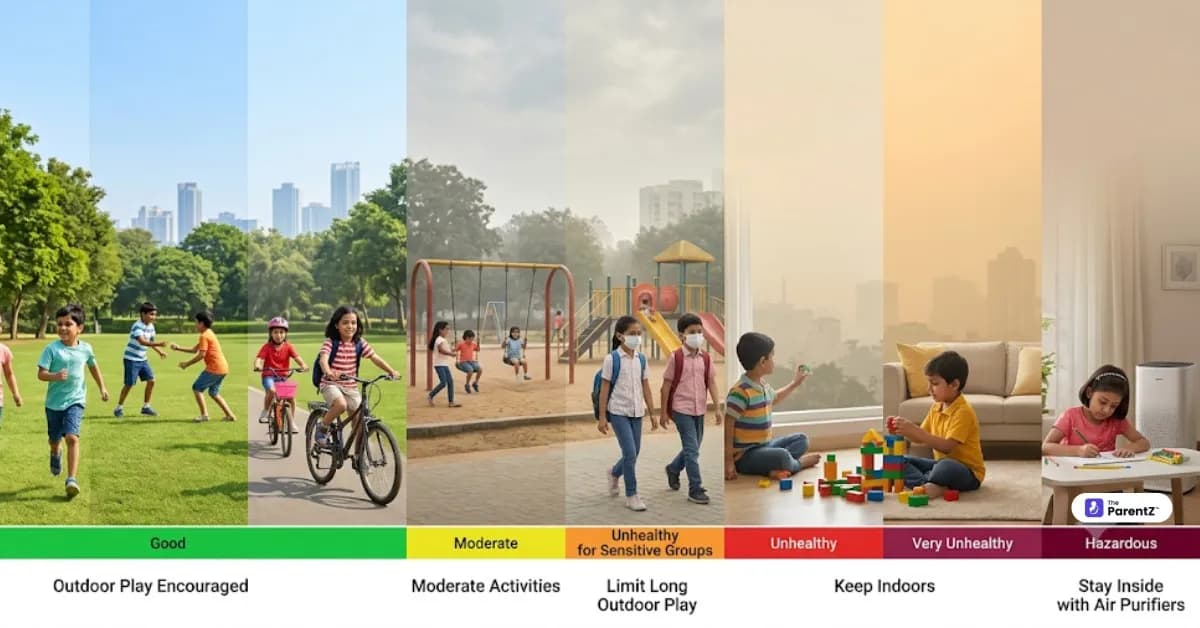
AQI Safe for Kids in India: When to Keep Children Indoors (Simple Chart for Parents)

Baby Milestone Tracker App for New Parents: How to Track Milestones Effortlessly
Discover how a baby milestone tracker app can help new parents record important developmental milestones, track new skills, and keep a clear history of their baby's progress over time.