How Missed Vaccine Records Create Confusion During School Admissions and Travel
Key Takeaways
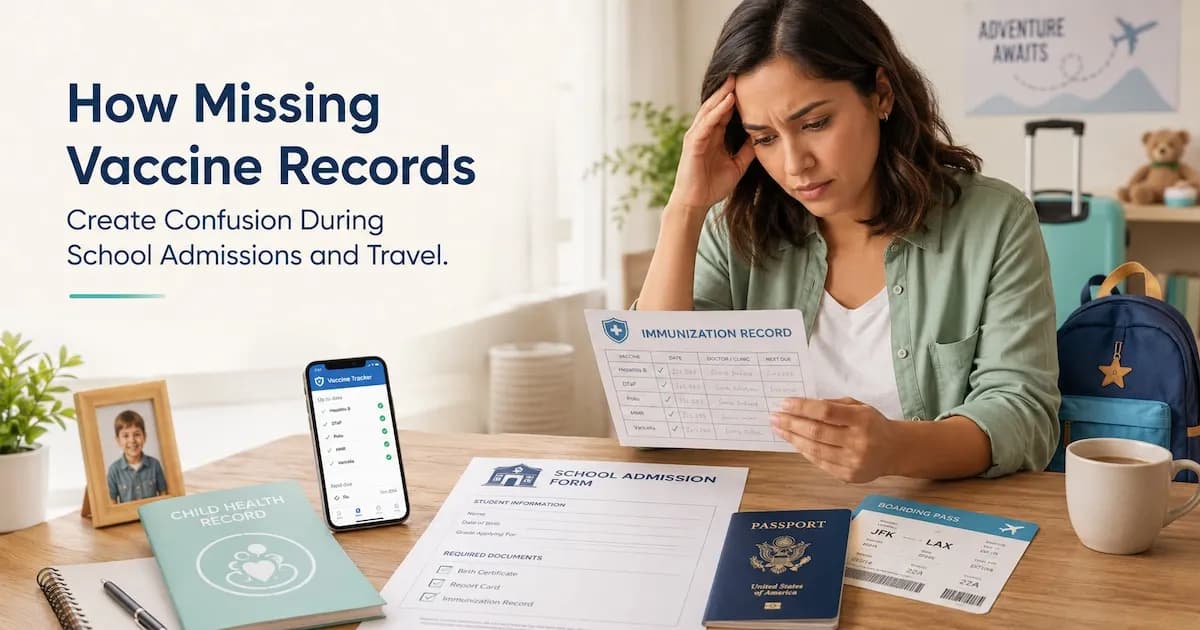
Lost or incomplete vaccine records can cause stress during school enrollment, travel, and medical paperwork. Here’s why keeping your child’s vaccination records updated and organized matters.
While there's no denying that getting a child vaccinated on time is one of the most important steps parents can take to protect their health, keeping a proper record of those vaccinations is equally important. Not only do vaccine records help track a child's immunization history, but they also reduce the chances of missing important vaccine information in the future.
Many families do not think about vaccine records until they are suddenly asked to provide them. This often happens during school admissions, travel planning, camp registrations or when changing healthcare providers. If the records are missing, incomplete, or difficult to find, parents may face delays, extra paperwork and unnecessary stress.
As per the Centers for Disease Control and Prevention, vaccination records are often needed for school enrollment, childcare programs, sports activities, camps, and international travel. Keeping accurate records can help families quickly provide proof of vaccination when required and avoid unnecessary complications. While you can find a plethora of baby vaccination tracker apps with reminders, you would still need to focus on keeping vaccination records updated after every vaccine visit and making sure all details are accurate and complete over time.
Nonetheless, by keeping a clear and updated record of your child's vaccinations, you can save time, prevent missing information, and maintain a complete history of your child's immunizations.
Why Vaccine Records Matter
Vaccine records play an important role in keeping a child’s health history clear and complete. It helps create a clear history of a child's immunizations from infancy through later childhood.
These records are important for several reasons. They help healthcare providers determine whether a child is up to date on recommended vaccines. They also help parents avoid confusion about future vaccine schedules.
In many situations, vaccine records are required as proof of immunization. Schools often request them during enrollment. Some travel destinations may require proof of certain vaccinations. Camps, daycare centers, as well as other programs, may also ask parents to provide vaccination records before allowing participation.
Without these records, it can become difficult to confirm a child's vaccination status when it matters most.
Common Problems Caused by Missing Vaccine Records
Many parents make the mistake of thinking that just getting their child vaccinated is enough and that keeping a proper record is not very important. However, what they fail to realize is the fact that vaccination records are just as important as the vaccines themselves when it comes to proving immunization history later. These records help ensure that important health details are not missed or repeated during future medical needs.
Here are some of the common problems caused by missing vaccine records.
Delays During School Admissions
During school admissions, it is common for schools to require vaccine records as part of the enrollment process. These documents help schools verify that students meet vaccination requirements before attending classes.
When parents cannot provide complete records, the admission process may take longer than expected.
In some cases, families may spend days or even weeks gathering information from different clinics or hospitals. This often becomes stressful when school deadlines are approaching.
This often causes a few practical issues that slow down the admission process for parents:
Admission forms get held up until vaccine details are confirmed
Parents struggle to piece together missing health information from past visits
Schools pause the process due to incomplete or unclear medical records
By keeping vaccination records ready, parents can reduce delays and avoid last-minute stress during admissions.
Difficulty Meeting Travel Requirements
Travel planning often involves collecting important documents, especially when traveling to other countries. Many destinations may ask for proof of certain vaccinations before entry or visa approval.
When vaccine records are missing, parents may struggle to confirm their child’s vaccination history. This often leads to extra work during travel preparation and may require reaching out to past healthcare providers for copies.
The problem becomes harder when travel plans are made quickly. Searching for old records while arranging tickets and other details can add pressure.
This often leads to gaps and delays, such as:
Inability to show a complete vaccination history during visa checks
Delays in completing travel paperwork because of missing health records
Properly maintained vaccine records reduce stress and make travel checks easier to handle.
Confusion About Which Vaccines Were Already Given
One of the biggest challenges of missing records is uncertainty about a child's vaccination history.
Parents may remember that a vaccine was given, but may not recall the exact date or type of vaccine received. As time passes, it can become harder to remember important details, especially when several years have gone by.
This confusion can make it difficult to know which vaccines are still needed and which have already been completed. Without a clear record, future vaccine planning becomes more complicated.
Accurate records provide a simple way to track vaccination history and help parents stay informed about upcoming vaccines.
Extra Medical Visits and Paperwork
Recovering missing vaccine records often takes time and effort. Parents may need to contact multiple clinics, hospitals or healthcare providers to request copies of old records.
If a family has moved to a different city or changed doctors several times, locating past records can become even more difficult.
In addition to making phone calls and submitting requests, parents may need to complete forms and wait for documents to be processed.
These extra steps can take valuable time and may create frustration for families who simply need proof of vaccination.
Common Reasons Vaccine Records Go Missing
No matter how carefully parents manage their child’s health care, vaccine records can still get misplaced, split across different places or become hard to trace over time. More often than not, these issues happen slowly without notice until the records are suddenly needed.
The table below shows the common reasons why vaccine records go missing.
Reason | What It Means |
Paper Records Get Lost | Vaccine cards and paper documents can be misplaced, damaged, or accidentally discarded. |
Change of Healthcare Provider | Records may be spread across multiple clinics, hospitals, or healthcare systems. |
Family Relocation | Moving to a new city, state, or country can make records harder to track and access. |
Incomplete Record Keeping | Some vaccination details may not be recorded properly at the time of vaccination. |
Multiple Caregivers | Important documents may be stored by different family members and become difficult to locate later. |
How Parents Can Keep Vaccine Records Organized
To ensure vaccine records stay complete and easy to access, parents need to keep in mind a few simple habits that help prevent missing details and confusion later. This also helps avoid confusion when multiple vaccination visits are involved.
Listed below are some practical ways to keep vaccine records organized.
Store Records in One Safe Place
One of the easiest ways to prevent lost vaccination records is to keep all vaccine documents together in a dedicated location.
Whether it is a folder, file cabinet, or document organizer, having a designated place for health records makes them easier to find when needed.
Parents should also make sure that all family members who may need access to the records know where they are stored.
Update Records After Every Vaccination
It goes without saying that a vaccination record is only useful if it remains accurate and current.
After every vaccination appointment, parents should review the record and make sure all information has been entered correctly. This includes vaccine names, dates, and any other important details provided by the healthcare provider.
Keeping records updated helps prevent gaps in information later.
Create Digital Copies
Let’s face it, paper vaccination records can be lost, damaged, or worn out over time. Creating digital copies provides an extra layer of protection.
Parents can scan vaccine records or take clear photos using a smartphone. These files can then be stored on a secure device or cloud storage service.
Having digital backups makes it easier to access records when traveling or completing school paperwork.
Use a Vaccine Tracking App
Technology can make vaccine record management much easier. A vaccine tracking app helps parents keep vaccination information in one place, monitor upcoming vaccines and access records when needed. Having digital records available on a phone or tablet can save time and reduce the risk of losing important documents.
These vaccine tracking apps can also help parents stay informed about future vaccinations and maintain a complete vaccination history.
Frequently Asked Questions
Can missing vaccine records affect international travel?
Yes. Some destinations may request proof of specific vaccinations. Missing records can make it harder to provide the required documentation during travel planning.
What should parents do if a vaccine record is lost?
Parents should contact their healthcare provider, clinic, or hospital to request copies of previous vaccination records. It is also helpful to create digital backups once the records are recovered.
Why do schools ask for vaccine records during admissions?
Schools often require vaccine records to verify that students meet immunization requirements and to maintain a safe learning environment.
Is it helpful to keep both paper and digital vaccine records?
Yes. Keeping both formats provides extra protection and makes it easier to access records when needed for school, travel or healthcare visits.
Conclusion
Vaccine records are an essential part of a child's healthcare history. They make it easier to know a child’s full vaccination history at any point in time.
Missing records can lead to delays during school admissions, make travel planning more difficult as well as create confusion about vaccination history. Nonetheless, by following a few simple record-keeping habits, parents can avoid these challenges.
Are you looking for a simple baby vaccination tracker app with reminders to keep your child’s vaccine records organized and easy to access? The ParentZ app helps parents track vaccinations, store records and manage important health information in one place.
More in this Category

Baby Milestone Tracker App for New Parents: How to Track Milestones Effortlessly
Discover how a baby milestone tracker app can help new parents record important developmental milestones, track new skills, and keep a clear history of their baby's progress over time.
Baby Vaccination Schedule: A Parent-Friendly Guide From Birth Through Childhood
Learn about the baby vaccination schedule from birth through childhood. Discover when vaccines may be due, how to track doses, what to do if a vaccine is missed, and simple tips to keep your child’s vaccination record up to date.

Baby First Foods: Age-Wise Foods for Babies from 6 to 12 Months
Discover suitable first foods for babies from 6 to 12 months, with age-wise food options, textures, nutrients, and helpful tips for introducing solids.

How Sleep Tracking Can Reveal Changes in Your Baby’s Sleep Pattern
Discover how tracking your baby's sleep can help parents notice changes in naps, bedtime, wake-up times, night wake-ups, and overall sleep patterns over time.

How to Track Breastfeeding, Bottle Feeds, and More with a Baby Feeding Tracker App
Learn how a baby feeding tracker app can help parents easily record breastfeeding, bottle feeds, pumping, formula, and feeding history while keeping important feeding details organized in one place.

How to Choose Safe and Nutritious First Foods for Your Baby
Learn how to choose safe and nutritious first foods for your baby, with practical tips on food texture, key nutrients, choking hazards, added salt and sugar, and simple food preparation.