When to Start Solids: The Complete WHO & AAP Guide for New Parents
Key Takeaways
Wondering when your baby is ready for solid foods? This complete guide explains WHO and AAP recommendations, key readiness signs, safe first foods, and practical feeding tips to help parents confidently start solids around 6 months of age.
When it comes to feeding babies during infancy, understanding the right time to start solids can be an important part of healthy growth and development. For many parents, this stage brings excitement along with questions and concerns about the right time to begin, safe first foods, and how to avoid choking or allergy risks.
Both the World Health Organization (WHO) and the American Academy of Pediatrics (AAP) recommend starting solid foods around 6 months of age. Still, every baby develops at a different pace. Some babies may show readiness signs a little earlier, while others may need more time to develop.
This is why parents should look beyond age alone. A baby’s body control, feeding behavior, and interest in food can often give a clearer picture of when solids may begin safely, which also makes the baby first foods preparation for new parents easier and more organized.
Nonetheless, with simple guidance and a better understanding of the readiness signs recommended by WHO and AAP, starting solids can feel less stressful and more manageable for new parents.
What Do WHO and AAP Say About Starting Solids?
Both the WHO and the AAP recommend starting solid foods at about 6 months for most babies. At this stage, many babies begin developing the physical and feeding skills needed for solids.
WHO also recommends exclusive breastfeeding during the first 6 months of a baby’s life, which means solid foods are usually not introduced before this stage unless medical guidance suggests otherwise.
After 6 months, small amounts of solid foods can be slowly introduced along with breast milk. These foods meet growing nutrition needs and also support babies as they learn feeding skills step by step in a safe way.
The American Academy of Pediatrics explains that breast milk or formula should still remain the main source of nutrition even after solids begin. Solid foods are added slowly at first to help babies adjust to new textures, tastes and feeding habits over time.
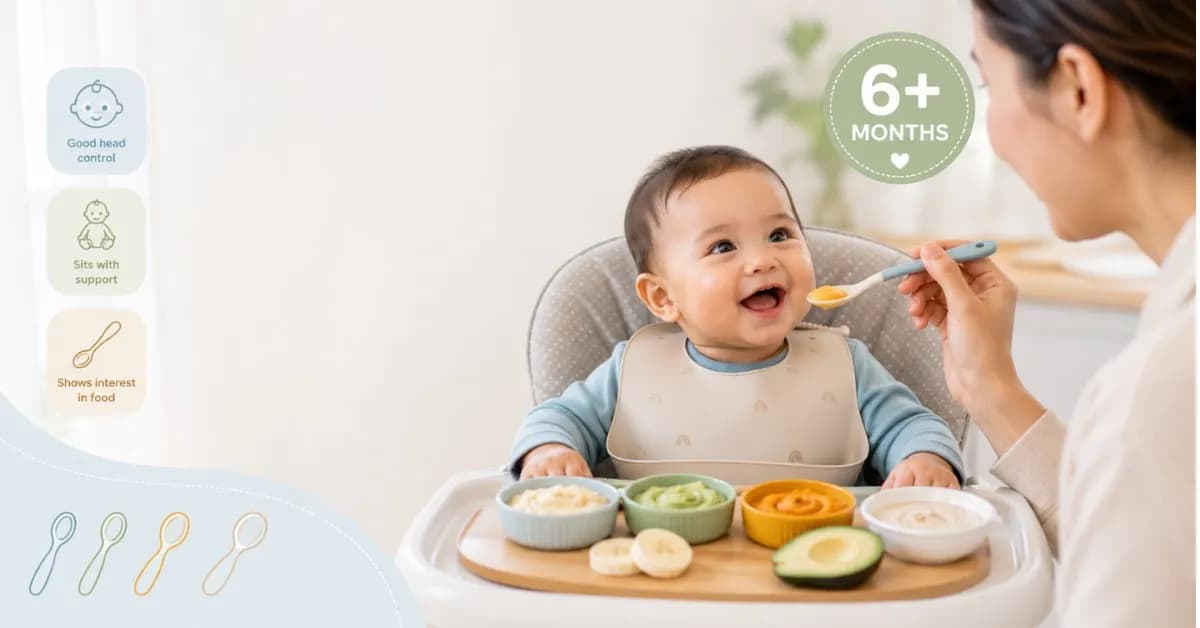
5 Signs Your Baby May Be Ready for Solids According to WHO and AAP
Both WHO and AAP recommend looking at developmental readiness signs along with age before starting solids. Most babies begin showing these signs around 6 months, though timing can still vary slightly from one child to another. The parents should also identify high-risk foods and learn safe preparation techniques to prevent choking incidents during weaning.
Here are five signs that can help parents understand if a baby may be ready to begin eating solid foods, as recommended by WHO and AAP.
Good Head Control
One of the strongest signs that a baby may be ready for solid foods is good head control. It shows that neck strength and stability have developed enough for safer feeding.
Steady head position: A baby who can hold the head steady without wobbling during sitting shows better control needed for eating solid food.
No head drop: If a baby is able to avoid head dropping when moved into a sitting position, it shows improved body control needed for feeding.
Stable during feeding: Remaining steady while being spoon-fed suggests the baby is gaining the control needed for solid foods.
Steady head control across daily activities is a strong sign that the baby may be ready to begin solid foods safely.
Sitting With Support
In addition to good head control, sitting with support is another key sign that a baby may be ready for solid foods. It helps create a safe and stable position for feeding.
Upright sitting: A baby who can sit upright with support in a chair or lap is better prepared for eating solid food safely.
Balanced posture: A baby maintaining balance during supported sitting shows that core muscles are getting stronger for handling solid foods safely.
Steady feeding position: A stable sitting posture during spoon feeding shows that the baby can stay well supported and controlled while eating, which is a clear sign of readiness for solid foods.
Good sitting control with support shows that the baby can handle the posture needed for safe, solid food feeding.
Interest in Food
Interest in food shows that a baby is becoming curious about eating and may be ready for solid foods.
Watching meals closely: When a baby pays close attention to others during meals, it shows growing interest in solid foods.
Mouth opening near food: If a baby opens the mouth when food is brought close, it suggests growing readiness for solid foods.
Reaching for food items: Babies who try to grab spoons, plates, or food show curiosity about eating and early interest in solid food exploration.
Strong curiosity during meals often shows that the baby is ready to explore solid foods.
Tongue Reflex Fades
A reduced tongue-thrust reflex is an important sign that a baby may be ready for solid foods. It shows better mouth control for eating.
Smoother swallowing: Babies who swallow more smoothly during feeding show better control and growing ability to handle solid food textures.
Less tongue pushing: If a baby pushes less food out with the tongue, it shows improved control needed for eating solid foods.
Improved mouth control: A baby who can keep food inside the mouth for longer during feeding shows better readiness for solid foods.
When the tongue-thrust reflex reduces, it becomes easier for the baby to handle solid foods safely.
Hand Mouth Control
If a baby is developing better hand and mouth coordination, it can be a sign that they may be ready for solid foods. It shows growing feeding-related skills and control.
Brings objects to mouth: Babies who often bring hands, toys, or safe objects to the mouth show growing readiness for solid food interaction.
Reaches for feeding items: A baby trying to grab spoons, plates, or food during meals reflects curiosity about solid foods.
Oral exploration: When a baby puts safe objects in the mouth during play, it means they are becoming more aware of eating-related movements needed for solid foods.
Better hand and mouth coordination shows that the baby is developing skills needed for starting solid foods.
Best First Foods for Babies Starting Solids
While giving solid foods to babies can help them grow and support their overall development, giving them any type of food may not be the right choice in the early stages. Since babies are still learning how to chew and swallow, the right texture and softness matter a lot.
The table below shows some of the best first foods for babies and why they work well during the early stage of introducing solid foods.
First Food | Why It Works Well |
Iron-Fortified Baby Cereal | Soft texture makes it easier to swallow. It also helps support iron needs during early growth. |
Mashed Banana | Bananas are soft, easy to mash, and simple for babies to eat during early feeding. |
Pureed Sweet Potato | Sweet potato has a smooth texture and mild taste that works well for beginners. |
Mashed Avocado | Avocado is naturally soft and contains healthy fats that support growth. |
Pureed Apple or Pear | Cooked and softened apples or pears are gentle and easier for spoon feeding. |
Soft Cooked Vegetables | Vegetables like carrots or peas can be softened well and help babies try new tastes gradually. |
Plain Yogurt | Plain yogurt has a smooth texture and can be easier for babies to eat after solids begin. |
Frequently Asked Questions
Can babies start solids before 6 months?
Most babies are usually ready for solids around 6 months. Starting before this age is not recommended for most babies because they may not yet have the neck control, sitting balance, and swallowing skills needed for safe feeding. Parents should look for readiness signs instead of focusing only on age.
Should solids replace milk feeds?
No. Breast milk or formula should still be the key source of nutrition when solid foods are first introduced. Solid foods are introduced slowly alongside regular milk feeding.
How often should babies eat solid foods when they first start?
It is best to begin with one small solid food meal per day. Feeding can be increased gradually as the baby becomes more comfortable.
What is the safest first food for babies?
Soft and smooth foods are usually easier for beginners. Foods like iron-fortified cereal, mashed banana, pureed vegetables, and avocado are commonly used as first foods.
Is gagging normal when starting solids?
It is normal for babies to gag a little when they begin solid foods. This is part of learning how to handle different food textures.
Conclusion
Starting solids is an important part of a baby’s first year, but the timing can look slightly different for every child. While most babies are ready around 6 months, readiness signs like head control, sitting support, and interest in food often give a clearer picture of when feeding may begin safely.
Parents should focus on steady progress instead of comparing one baby with another. By offering soft foods first and introducing textures step by step, babies can adapt more comfortably.
Are you looking for a baby tracking app that helps you monitor feeding, milestones, growth, and daily routines in one place? The ParentZ app helps parents track baby development, including feeding schedules, and manage everyday parenting tasks in a simple and organized way.
More in this Category

How Sleep Tracking Can Reveal Changes in Your Baby’s Sleep Pattern
Discover how tracking your baby's sleep can help parents notice changes in naps, bedtime, wake-up times, night wake-ups, and overall sleep patterns over time.

How to Track Breastfeeding, Bottle Feeds, and More with a Baby Feeding Tracker App
Learn how a baby feeding tracker app can help parents easily record breastfeeding, bottle feeds, pumping, formula, and feeding history while keeping important feeding details organized in one place.
How to Choose Safe and Nutritious First Foods for Your Baby
Learn how to choose safe and nutritious first foods for your baby, with practical tips on food texture, key nutrients, choking hazards, added salt and sugar, and simple food preparation.

How a Baby Development Tracker App Makes Growth Monitoring Easier for Parents
A baby development tracker app makes it easier for parents to monitor their child's growth, record developmental milestones, organize important updates, and follow progress over time.

Why Modern Parents Need an All-in-One Child Health and Growth Tracker App with an AI Assistant
An all-in-one child health and growth tracker app helps modern parents manage health records, track growth and milestones, receive reminders, and get AI-powered parenting support in one place.

Best Baby Milestone Tracker App for Android and iPhone: Features Every Parent Should Look For
Discover the key features parents should look for in a baby milestone tracker app, from milestone and growth tracking to feeding, sleep, personalized insights, and secure data storage.