Key Things Parents Should Consider When Introducing First-Time Foods
Key Takeaways
Introducing solid foods is an exciting milestone, but successful first feeding involves more than choosing the right food. Learn how to recognize readiness signs, introduce new foods safely, monitor for allergies, and create positive feeding habits. This guide shares practical tips to help parents confidently navigate their baby's transition to solids.
It goes without saying that introducing your little one to solid foods is a major milestone in their early years. Not only does it open the door to new tastes and textures, but it also marks the beginning of an important stage in their growth and development.
With that said, while many parents only focus on choosing the right first food, there is more to think about than what goes on the spoon. According to the World Health Organization, infants generally require complementary foods from around six months of age because breast milk alone may no longer meet all of their nutritional needs.
This is why a baby’s first food preparation for new parents involves much more than simply deciding what food to offer first. The timing of solid foods, a baby's readiness, food safety, and possible reactions all play a role in creating a positive feeding experience. Taking a thoughtful approach can help babies adjust more comfortably while giving parents greater confidence during this transition.
While every baby develops at their own pace, paying attention to a few key factors as they begin trying solid foods can help support a safer and more comfortable feeding experience.
Key Things Parents Should Consider When Introducing First-Time Foods
While every baby responds differently to first-time foods, there are still a few important factors that can help parents get started on the right track. From knowing when a baby is ready to understanding how to introduce new foods, these factors can help make the process easier.
Here are five key things parents should consider when introducing first-time foods.
Look for Readiness Signs
One of the most important things to consider when introducing solid foods is whether your baby is ready. Age alone should not be the only factor. Babies develop at different rates, and readiness signs can provide a better indication of when to begin.
Some common signs of readiness include:
Good head and neck control
Ability to sit with support
Interest in watching others eat
Opening the mouth when food is offered
These signs suggest that a baby may be physically prepared to handle solid foods. Starting before a baby shows these signs can make feeding more difficult and may increase the risk of choking.
Watching for readiness cues can help create a more positive first-food experience for both parents and babies.
Choose Foods Carefully
When introducing first-time foods, simplicity is often the best approach. Starting with single-ingredient foods makes it easier to observe how a baby responds to each new item.
While many parents focus on the debate around Homemade vs Store-Bought Baby Food, it is equally important to consider factors such as ingredient simplicity, texture, and how well a baby responds to each new food.
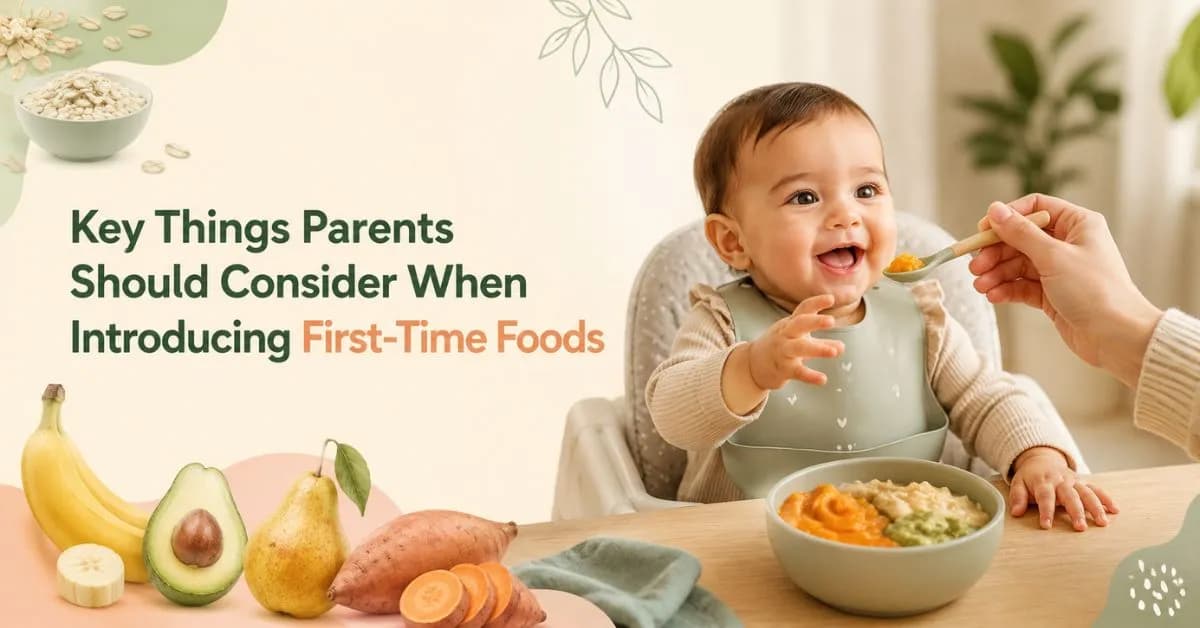
Some common first foods include:
Mashed banana
Pureed sweet potato
Avocado
Oat cereal
Pureed pear
These foods are often chosen because they are soft, easy to prepare, and suitable for beginners.
Texture is also important during this stage. Foods should be smooth, soft, and easy to swallow. As babies become more comfortable with eating, textures can gradually become thicker and more varied.
Offering simple foods one at a time can help babies become familiar with new tastes without overwhelming them.
Introduce One Food at a Time
Many parents are eager to offer a variety of foods once solids begin. While introducing different foods is important, it is usually best to do it gradually.
Introducing one new food at a time can help parents:
Notice possible food allergies
Understand which foods a baby enjoys
Track feeding patterns more easily
If several new foods are introduced together, it becomes harder to determine which one may have caused a reaction.
A simple approach is to offer one new food and observe your baby over the next few days before adding another. This method helps create a clearer picture of how your baby responds to different foods.
Taking things slowly during the early stages can make feeding more manageable and less stressful.
Watch for Allergy Reactions
No matter which food is introduced first, parents should always be aware of the possibility of an allergic reaction. Although allergic reactions are not common in every baby, it is important to watch for signs that may need closer attention.
Some of the common signs of a food allergy can include:
Skin rash
Hives
Swelling of the face or lips
Vomiting
Diarrhea
Persistent coughing
Breathing difficulties
Some reactions may appear shortly after eating, while others may take longer to develop.
Parents should carefully observe their baby after introducing a new food, especially foods that are known to be common allergens. Keeping track of what was offered and when it was introduced can make it easier to identify possible triggers.
Any severe reaction or breathing difficulty requires immediate medical attention.
Being aware of allergy signs can help parents respond quickly if concerns arise.
Focus on Safe Feeding Practices
When it comes to giving solid foods to your baby, safety should always be a top priority. Since babies are still learning how to chew and swallow, proper feeding practices are important. Choosing appropriate foods and textures can help reduce feeding risks.
Some important feeding safety practices include:
Offer soft and age-appropriate foods
Ensure food is prepared in a safe texture for your baby's stage
Supervise all meals
Keep the baby seated upright during feeding
It is also helpful to pay attention to hunger and fullness cues.
Common hunger cues may include:
Reaching for food
Opening the mouth when food is offered
Showing interest in meals
Common fullness cues may include:
Turning the head away
Closing the mouth
Pushing food away
Losing interest in eating
By following safe feeding practices and paying attention to your baby's hunger as well as fullness cues, you can help create a safer and more positive mealtime experience.
Common First Foods and What Parents Should Know
Choosing the right first foods for a baby often feels overwhelming because there are many options available. The good news is that several simple foods are commonly used when babies begin solids.
The table below highlights some popular choices and why parents often select them.
First Food | Why It Is Often Chosen |
Mashed Banana | Soft texture and easy to eat |
Avocado | Naturally soft and rich in healthy fats |
Pureed Sweet Potato | Mild taste and smooth texture |
Oat Cereal | Easy to prepare and suitable for beginners |
Pureed Pear | Gentle texture and mild flavor |
Looking for more help as your baby begins eating solids? Explore our comprehensive Feeding & Nutrition guides for expert, evidence-based advice on every stage of your baby's feeding journey. Whether you're learning the signs of readiness in the Starting Solids Guide, considering Baby-Led Weaning, choosing the Best First Foods, preparing smooth Baby Food Purees, introducing Finger Foods or Bite-Sized Foods, selecting the Best Milk for Kids, or learning how to prevent choking with our Choking Hazards Guide, you'll find practical tips to help make mealtimes safer, easier, and more enjoyable for both you and your little one. Browse all of our parenting resources in the Parenting Guide to find the guidance that best matches your baby's stage of development.
Tips for a Smooth Transition to Solid Foods
By taking a gradual and thoughtful approach, parents can make the transition to solid foods smoother and more comfortable for their little one. Even if there are challenges along the way, such as food refusal or changing feeding habits, patience and consistency can help babies adjust to this new stage over time.
Listed below are four tips to make the transition to solid foods easier and more enjoyable.
Keep Feeding Times Relaxed
A calm feeding environment can help babies focus on eating and exploring new foods.
Choose a comfortable place for meals and limit distractions when possible. Babies often respond better when feeding feels relaxed rather than rushed.
Allow your baby time to touch, smell as well as explore food. This is a normal part of learning.
Expect Some Food Refusal
Many parents worry when a baby rejects a new food. In most cases, this is completely normal. Babies are learning new tastes and textures for the first time. A food that is refused today may be accepted after several more attempts.
Some babies need repeated exposure before becoming comfortable with a new food.
Food refusal does not always mean dislike. It is often part of the learning process.
Continue Breast Milk or Formula
Introducing solids does not replace breast milk or formula right away. During the early stages of solid feeding, milk continues to provide most of a baby's nutrition.
Parents should continue offering regular milk feeds while introducing solid foods at a pace that suits their baby's development.
Track New Foods and Reactions
Keeping a simple feeding record can be very helpful during the first months of solid feeding.
Parents can track:
Foods introduced
Feeding times
Amount eaten
Possible reactions
Changes in appetite
These records can help identify patterns as well as make it easier to discuss feeding concerns with a healthcare provider if needed. A feeding tracker app can also help parents keep all this information in one place for easier monitoring.
Tracking also provides a useful way to monitor progress as babies become more comfortable with a wider range of foods.
Frequently Asked Questions
What is the best age to introduce first-time foods?
Many babies begin solid foods around six months of age. However, readiness signs are often more important than age alone. Parents should look for signs that show a baby is physically prepared to handle solid foods.
Can babies drink water when they start solid foods?
Most babies can begin having small sips of water after they start eating solid foods. Water can be offered with meals, but milk feeds should continue to remain a regular part of the baby's diet.
Which foods should be avoided when starting solids?
Foods that pose a choking risk should be avoided. Hard, round, or sticky foods may be difficult for babies to handle safely. Foods should always match a baby's stage of development and eating ability.
What should parents do if a baby refuses a new food?
Parents should stay patient and try again another day. It can take several attempts before a baby accepts a new food. Keeping feeding sessions relaxed can help make the experience more positive.
Conclusion
Introducing first-time foods is about more than choosing what a baby will eat first. Readiness, food safety, gradual introduction, and careful observation all play an important role in building healthy feeding habits.
Every baby will move through this stage differently. Paying attention to feeding cues, offering appropriate foods, as well as taking a steady approach can help make the transition smoother and more enjoyable.
Are you planning to introduce solid foods to your little one and want an easy way to keep track of their feeding journey? The ParentZ app helps parents record meals, monitor feeding habits, and track new foods in one place.
More in this Category

Baby Milestone Tracker App for New Parents: How to Track Milestones Effortlessly
Discover how a baby milestone tracker app can help new parents record important developmental milestones, track new skills, and keep a clear history of their baby's progress over time.

Baby Vaccination Schedule: A Parent-Friendly Guide From Birth Through Childhood
Learn about the baby vaccination schedule from birth through childhood. Discover when vaccines may be due, how to track doses, what to do if a vaccine is missed, and simple tips to keep your child’s vaccination record up to date.
Baby First Foods: Age-Wise Foods for Babies from 6 to 12 Months
Discover suitable first foods for babies from 6 to 12 months, with age-wise food options, textures, nutrients, and helpful tips for introducing solids.

How Sleep Tracking Can Reveal Changes in Your Baby’s Sleep Pattern
Discover how tracking your baby's sleep can help parents notice changes in naps, bedtime, wake-up times, night wake-ups, and overall sleep patterns over time.

How to Track Breastfeeding, Bottle Feeds, and More with a Baby Feeding Tracker App
Learn how a baby feeding tracker app can help parents easily record breastfeeding, bottle feeds, pumping, formula, and feeding history while keeping important feeding details organized in one place.
How to Choose Safe and Nutritious First Foods for Your Baby
Learn how to choose safe and nutritious first foods for your baby, with practical tips on food texture, key nutrients, choking hazards, added salt and sugar, and simple food preparation.