How to Choose Safe and Nutritious First Foods for Your Baby
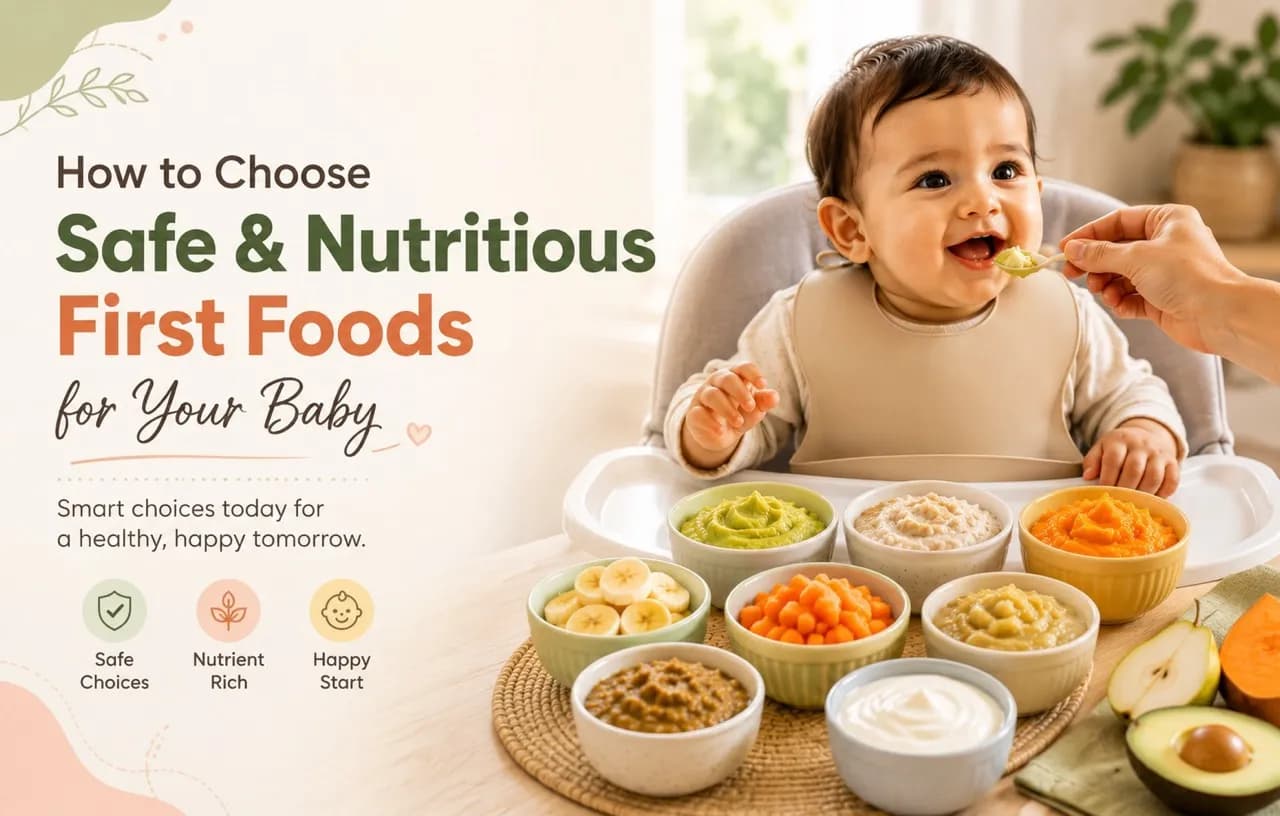
Key Takeaways
Learn how to choose safe and nutritious first foods for your baby, with practical tips on food texture, key nutrients, choking hazards, added salt and sugar, and simple food preparation.
While introducing solid foods to a baby is an exciting step, choosing the right first foods can feel confusing because there are many options to consider. Since babies can have different eating skills and needs, not every food is suitable for every kid.
Besides, some foods may be nutritious but can still be unsafe if they are served in the wrong size, shape, or texture. In addition, parents may also need to think about how each food is prepared and whether it fits the baby's stage of eating.
While you can find a plethora of websites offering a baby first foods database for modern parents, you would still need to do your own research and check whether the food choices are safe and suitable for your baby's needs. Nonetheless, by gathering the right information and keeping a few important things in mind, parents can make more informed choices when selecting first foods for their baby.
5 Tips to Choose Safe and Nutritious First Foods for Your Baby
Choosing a baby's first foods involves more than picking something soft or easy to mash. Parents also need to think about the food's nutrients, texture, preparation, and how well it suits the baby's eating skills.
Keeping a few simple points in mind can make it easier to choose foods that are both safe and nutritious for this new stage of feeding. Here are five tips to choose safe and nutritious first foods for a baby.
Choose Soft and Easy-to-Eat Foods
When babies start eating solid foods, they are still learning how to move food around their mouths and swallow it. This is why soft foods are often a good place to start.
Foods should be soft enough to mash easily with a fork. Parents can cook vegetables until they are tender and mash them before serving. Soft fruits can also be mashed or offered in a form that is easy for the baby to manage.
Some simple options include banana, avocado, cooked sweet potato, soft pear, and well-cooked carrots. Foods such as meat may also need to be finely minced, shredded, or pureed so they are easier to eat.
By choosing soft and easy-to-eat foods, parents can make it easier for babies to handle their first meals as they learn to eat.
Look for Foods Rich in Key Nutrients
Even if a food looks tasty and appealing to a baby, if it does not provide key nutrients, it may not add much value to the baby's diet. First foods should offer more than a pleasant taste and provide useful nutrients as parents begin introducing first foods to babies who are starting to eat solids.
Iron is one key nutrient to look for in first foods, as it supports a baby's growth and development. Foods such as eggs, lentils, beans, iron-fortified cereals, and well-cooked meat can help provide iron while also adding protein to meals. Other foods can add different nutrients to the diet, such as vitamins and fiber from fruits and vegetables, healthy fats from avocado, and protein and calcium from plain full-fat yogurt.
Rather than relying on the same food each day, parents can offer different nutrient-rich foods over time. This can help babies get a wider mix of nutrients while they become familiar with new foods and flavors.
Avoid Common Choking Hazards
One of the major factors that parents need to consider when choosing first foods is the risk of choking. A food may be suitable for a baby, but its size, shape, or texture can make it harder to chew and swallow safely.
Whole nuts, popcorn, hard raw vegetables, whole grapes, and large chunks of firm food can be choking hazards. Round and firm foods may need to be changed in shape or texture before they are offered.
For example, grapes can be cut into thin pieces, while hard vegetables can be cooked until soft. Nuts should not be given whole, while smooth nut butter can be thinned or spread in a suitable way.
Parents should also stay close while a baby is eating and make sure the baby is sitting upright. By preparing foods in a suitable size, shape, and texture, parents can make first meals safer and easier for a baby to eat.
Limit Added Salt and Sugar
A baby's food does not need extra salt or sugar to taste good. Since babies are still getting used to new tastes, adding these ingredients can make their early meals less suitable for their age.
Instead of adding sugar, fruits such as banana, pear, and mango can provide a naturally sweet taste. Foods such as vegetables, grains, eggs, and lentils can also be served without added salt.
Packaged foods need extra care, as some may contain added sugar or high amounts of salt. Checking the food label can help parents spot these ingredients before buying them.
Keeping added salt and sugar out of a baby's meals can help parents offer simple foods without making them sweeter or saltier than needed.
Choose Fresh and Minimally Processed Foods
Fresh and simple foods can be a good choice when selecting first foods for a baby. Parents can look for foods that are close to their natural form and do not contain many added ingredients.
Fresh fruits, vegetables, eggs, lentils, grains, and other simple foods can be prepared in a form that suits a baby's eating skills. These foods also make it easier for parents to know what is being added to the baby's meal.
Packaged foods can still be used when suitable, but parents should check the label for added salt, sugar, and other ingredients. Choosing foods with fewer added ingredients can make it easier to know what the baby is eating.
By choosing fresh and simple foods where possible, parents can make first food choices easier and have better control over what goes into a baby's meals.
Safe and Nutritious First Foods to Consider for Your Baby
While the right first food mainly depends on a baby's age, eating skills, and food needs, there are some simple options that can provide useful nutrients when served in a suitable form. These foods can also be prepared in different ways to make them easier for babies to eat as they get used to solid foods.
The table below highlights some safe and nutritious first foods that parents can consider for their baby, along with their key nutrients and simple ways to serve them.
First Food | Key Nutrients | How to Serve It |
|---|---|---|
Sweet potato | Vitamin A, fiber | Cook until soft and mash |
Banana | Potassium, fiber | Mash until soft |
Avocado | Healthy fats, fiber | Mash or offer in a soft form |
Lentils | Protein, iron, fiber | Cook well and mash |
Iron-fortified infant cereal | Iron and other nutrients | Prepare to a soft texture |
Plain full-fat yogurt | Protein, calcium, fat | Serve plain and smooth |
Pear | Fiber, vitamin C | Use a ripe pear or cook until soft |
Carrot | Vitamin A, fiber | Cook until soft and mash |
Oatmeal | Fiber and iron when fortified | Cook until soft and easy to swallow |
Frequently Asked Questions
What are the signs that a baby is ready for solid foods?
Common signs include being able to sit upright with good head control, showing interest in food, opening the mouth when food is offered, and being able to swallow food instead of pushing it out with the tongue. Readiness can vary, so parents can also discuss starting solids with a healthcare provider.
How much food should a baby eat when starting solids?
At first, babies may only eat a small amount. The goal is to help them learn how to eat and get used to new tastes and textures. The amount can increase as the baby becomes more comfortable with solid foods.
How often should new foods be offered?
New foods can be offered in small amounts as part of the baby's regular meals. There is no need to introduce many new foods at once. Giving a baby time to get used to each food can make it easier to notice any reaction.
What should be done if a baby refuses a new food?
It is common for babies to reject a food when they first try it. Parents can offer the food again at another time without forcing the baby to eat it. Repeated exposure may help the baby become more familiar with the taste.
How can parents spot a possible food allergy?
A food reaction may include signs such as a rash, swelling, vomiting, coughing, wheezing, or other sudden changes after eating. Parents should seek medical help if a baby shows signs of a serious reaction.
Can babies eat the same foods as the rest of the family?
Some family foods may be suitable if they are prepared in a baby-safe form. Foods may need to be cooked until soft, mashed, shredded, or cut into a suitable shape. Family meals should also avoid added salt and sugar when being adapted for a baby.
How should leftover baby food be stored?
Food should be handled and stored safely to lower the risk of harmful germs. Parents should follow food safety guidance for storage times and temperatures and avoid saving food that has already been in the baby's mouth.
Conclusion
Choosing first foods is not just about finding foods that a baby likes. Parents also need to consider safety, texture, nutrients, and how the food is prepared. As babies grow, their eating skills also change, so the foods and textures they can handle may change over time.
Taking the time to learn about different food options can help parents feel more prepared during this new stage. It can also make it easier to offer a wider range of foods as a baby becomes more comfortable with eating solids.
Are you looking for safe and nutritious first foods and recipes that can be given to your little one? The ParentZ offers a baby first foods database with information on different foods, their nutrients, and recipes, helping parents make informed choices as their baby begins eating solids.
More in this Category

Baby Milestone Tracker App for New Parents: How to Track Milestones Effortlessly
Discover how a baby milestone tracker app can help new parents record important developmental milestones, track new skills, and keep a clear history of their baby's progress over time.
Baby Vaccination Schedule: A Parent-Friendly Guide From Birth Through Childhood
Learn about the baby vaccination schedule from birth through childhood. Discover when vaccines may be due, how to track doses, what to do if a vaccine is missed, and simple tips to keep your child’s vaccination record up to date.
Baby First Foods: Age-Wise Foods for Babies from 6 to 12 Months
Discover suitable first foods for babies from 6 to 12 months, with age-wise food options, textures, nutrients, and helpful tips for introducing solids.

How Sleep Tracking Can Reveal Changes in Your Baby’s Sleep Pattern
Discover how tracking your baby's sleep can help parents notice changes in naps, bedtime, wake-up times, night wake-ups, and overall sleep patterns over time.

How to Track Breastfeeding, Bottle Feeds, and More with a Baby Feeding Tracker App
Learn how a baby feeding tracker app can help parents easily record breastfeeding, bottle feeds, pumping, formula, and feeding history while keeping important feeding details organized in one place.

How a Baby Development Tracker App Makes Growth Monitoring Easier for Parents
A baby development tracker app makes it easier for parents to monitor their child's growth, record developmental milestones, organize important updates, and follow progress over time.