Baby First Foods: Age-Wise Foods for Babies from 6 to 12 Months
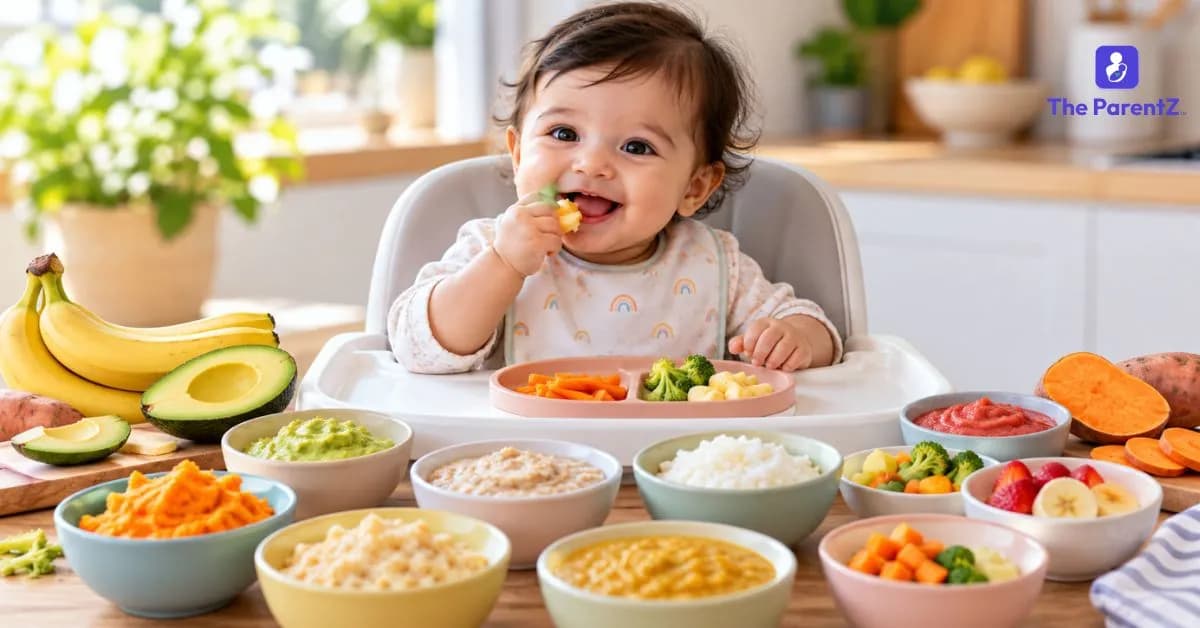
Key Takeaways
Discover suitable first foods for babies from 6 to 12 months, with age-wise food options, textures, nutrients, and helpful tips for introducing solids.
While introducing solid foods to a baby is an exciting and memorable step, choosing the right first foods can be a daunting task. Not only do parents need to consider the food itself, but they also need to think about its texture, portion size, and how it should be served.
Some foods can be soft and easy for a baby to eat, while others may need to be mashed, cooked, or cut into smaller pieces. As babies grow from 6 to 12 months, their eating skills also change, so the foods and textures they can handle may change with them. While you can find a plethora of websites offering a baby first foods database for modern parents, you would still need to choose foods that suit your baby's age and eating skills.
Knowing which foods to offer at each age can make this stage easier for parents.
Why Choosing the Right First Foods Matters
The first foods a baby eats can provide nutrients that support growth while also helping them learn how to eat different foods. While many parents get confused about things like when to start solid foods or which foods to offer first, they often overlook the importance of choosing foods that match their baby’s age and eating skills. However, what they fail to realize is that the right first foods are not just about nutrition, but also about helping babies learn to handle different tastes and textures safely.
Needless to say, giving the wrong food to your little one can make it harder for them to eat safely or get the nutrients they need. Since their eating skills change as they grow, the right food choices can help parents offer foods that suit their age and eating skills.
Here are some reasons why choosing suitable first foods matters.
Babies Need More Than Breast Milk or Formula After 6 Months
Around 6 months, babies need extra nutrients and energy that breast milk or formula alone may not provide. The right first foods can help provide nutrients such as iron, protein, vitamins, and minerals that support their growth and development.
Choosing nutrient-rich foods also gives babies a wider range of nutrients as they begin eating solid foods alongside breast milk or formula.
Babies Learn to Eat Different Foods
The first foods also help babies learn how to eat. Babies gradually learn to manage different tastes, textures, and food forms as their eating skills develop.
Choosing foods with textures that match their eating skills can make it easier for them to handle and enjoy different foods. It also helps them move from smooth foods to thicker textures and soft pieces as their eating skills improve.
Food Choices Change as Babies Grow
A baby's food choices do not stay the same from 6 to 12 months. As babies grow, their nutritional needs increase, and their ability to eat different foods also develops. This means the foods they can have become more varied over time.
For example, a baby's first foods may include simple, soft foods at 6 months, while their diet can become more varied by 9 or 12 months. These changes make age an important factor when looking at suitable first foods for babies.
Age-Wise First Foods for Babies From 6 to 12 Months
The foods a baby can have change as they grow. At 6 months, they are just starting to get used to solid foods, while older babies can handle a wider range of foods and textures. Their nutritional needs also change during this stage.
Here is a look at the foods that can be suitable for babies at different ages from 6 to 12 months.
Foods for Babies at 6 Months
At 6 months, babies can start with soft and easy-to-eat foods. Examples include:
Mashed banana and avocado
Cooked and mashed apple
Sweet potato, carrot, and pumpkin
Mashed lentils and beans
Iron-fortified infant cereal
Soft, well-cooked grains
Start with smooth or mashed foods and small amounts. Breast milk or infant formula should continue as part of the baby's diet.
Foods for Babies at 7 Months
At 7 months, babies can try a wider range of foods and slightly thicker textures. Suitable options include:
Mashed fruits and vegetables
Lentils and beans
Rice and oats
Plain yogurt without added sugar
Soft, well-cooked grains
Mashed eggs
Foods can be thicker and less smooth as the baby becomes more comfortable with eating.
Foods for Babies at 8 Months
By 8 months, many babies can start handling more texture and soft finger foods. Options can include:
Soft pieces of banana, avocado, or cooked fruit
Cooked vegetables
Rice and soft khichdi
Oats
Well-cooked eggs
Soft pieces of vegetables that are easy to hold
The food should be soft enough to mash easily and prepared in a size that reduces the risk of choking.
Foods for Babies at 9 Months
At 9 months, babies can have a wider range of foods. Examples include:
Soft fruits and vegetables
Eggs
Lentils and beans
Soft rice and other grains
Soft pieces of cooked meat or fish
Soft family foods prepared without added salt
At this stage, babies can also practice picking up soft pieces of food and feeding themselves.
Foods for Babies at 10 Months
By 10 months, parents can offer more types of family foods in a baby-safe form. These may include:
Soft fruits and vegetables
Rice, oats, and other grains
Eggs
Lentils and beans
Soft fish or meat
Plain yogurt and other suitable dairy foods
Food can have more texture as the baby's eating skills improve.
Foods for Babies at 11 Months
At 11 months, babies can eat a broader mix of foods from different food groups. Options include:
Soft fruits and vegetables
Eggs and other protein foods
Lentils and beans
Rice and other grains
Soft family meals prepared without added salt
Soft foods that encourage self-feeding
Offering different foods can help babies become familiar with a range of tastes and textures.
Foods for Babies at 12 Months
At 12 months, most babies can eat many of the same types of healthy foods as the rest of the family, with food size and texture adjusted when needed.
Suitable choices include:
Fruits and vegetables
Rice, oats, and other grains
Eggs
Fish and meat
Lentils and beans
Yogurt, cheese, and other suitable dairy foods
Soft family meals
Parents should continue to offer a varied diet with nutrient-rich foods.
A Simple Age-Wise Food Guide for Babies
The table below gives a quick look at the foods and textures that may be suitable for babies at different ages from 6 to 12 months.
Age | Food Examples | Texture to Try |
|---|---|---|
6 Months | Banana, sweet potato, lentils, infant cereal | Smooth, mashed |
7 Months | Fruits, vegetables, yogurt, grains, lentils | Mashed, thicker |
8 Months | Eggs, rice, khichdi, soft vegetables, soft fruit | Soft, lumpy, finger foods |
9 Months | Family foods, eggs, beans, fruits, vegetables | Soft pieces |
10 Months | Grains, vegetables, fruits, fish, meat, eggs | Soft, bite-sized pieces |
11 Months | Family foods, fruits, vegetables, grains, protein foods | Soft pieces |
12 Months | A wider range of family foods | Small, soft pieces |
How a Baby Food Tracker App Can Make Feeding Easier
With a baby food tracker app, parents can record the foods their baby has tried and review past food records. Not only does the app make it easier to keep food records in one place, but it can also help parents understand their baby’s eating patterns over time.
Here's how a baby food tracker app can make it easier to keep track of a baby's food journey.
Feature | Description |
|---|---|
Food Tracking | Lets parents record foods their baby eats. |
Meal Records | Helps parents keep track of daily meals. |
New Food Records | Makes it easier to remember which foods the baby has tried. |
Food History | Keeps past food records for parents to review. |
Daily Food Log | Gives parents one place to record daily food updates. |
Food Pattern View | Helps parents see the types of foods offered over time. |
Frequently Asked Questions
When can babies start eating finger foods?
Most babies can start trying soft finger foods at around 8 months, as their eating skills develop. Foods should be soft, easy to hold, and prepared in a safe form.
Can babies eat the same foods as the rest of the family?
By around 12 months, most babies can eat many of the same types of healthy foods as the rest of the family. Foods may still need to be cut, mashed, or prepared in a way that suits the baby's eating skills.
Why should parents track the foods their baby eats?
Tracking foods can help parents remember what their baby has tried and review the types of foods offered over time. It can also make it easier to keep a record of meals and new foods.
How much food should a baby eat when starting solids?
Babies can start with small amounts and gradually eat more as they grow. WHO recommends 2 to 3 tablespoons as a starting amount for babies aged 6 to 8 months, with the amount increasing as the child gets older.
What nutrients are important in a baby's first foods?
Babies need foods that provide nutrients such as iron, protein, vitamins, and minerals. Foods such as eggs, meat, fish, lentils, beans, fruits, vegetables, and fortified infant cereals can help provide these nutrients.
Should breast milk or formula still be given after starting solid foods?
Yes. Solid foods are added to the baby's diet and do not replace breast milk or infant formula right away. Breastfeeding can continue while complementary foods are introduced.
How should food texture change as a baby grows?
Babies can start with smooth, mashed, or soft foods around 6 months. As their eating skills improve, parents can offer thicker foods, soft pieces, and finger foods. By around 12 months, many babies can eat family foods with suitable changes to size and texture.
Conclusion
Giving the right first foods to your little one can help them get the nutrients they need at each stage from 6 to 12 months. Not only can age-wise food choices help them get used to different tastes and textures, but they can also help parents offer a varied diet throughout their first year.
Are you looking for a baby food tracker app to keep track of age-appropriate foods for your little one? The ParentZ app helps parents record the foods their baby has tried and keep a clear record of their diet.
More in this Category

Baby Milestone Tracker App for New Parents: How to Track Milestones Effortlessly
Discover how a baby milestone tracker app can help new parents record important developmental milestones, track new skills, and keep a clear history of their baby's progress over time.

Baby Vaccination Schedule: A Parent-Friendly Guide From Birth Through Childhood
Learn about the baby vaccination schedule from birth through childhood. Discover when vaccines may be due, how to track doses, what to do if a vaccine is missed, and simple tips to keep your child’s vaccination record up to date.

How Sleep Tracking Can Reveal Changes in Your Baby’s Sleep Pattern
Discover how tracking your baby's sleep can help parents notice changes in naps, bedtime, wake-up times, night wake-ups, and overall sleep patterns over time.

How to Track Breastfeeding, Bottle Feeds, and More with a Baby Feeding Tracker App
Learn how a baby feeding tracker app can help parents easily record breastfeeding, bottle feeds, pumping, formula, and feeding history while keeping important feeding details organized in one place.
How to Choose Safe and Nutritious First Foods for Your Baby
Learn how to choose safe and nutritious first foods for your baby, with practical tips on food texture, key nutrients, choking hazards, added salt and sugar, and simple food preparation.

How a Baby Development Tracker App Makes Growth Monitoring Easier for Parents
A baby development tracker app makes it easier for parents to monitor their child's growth, record developmental milestones, organize important updates, and follow progress over time.